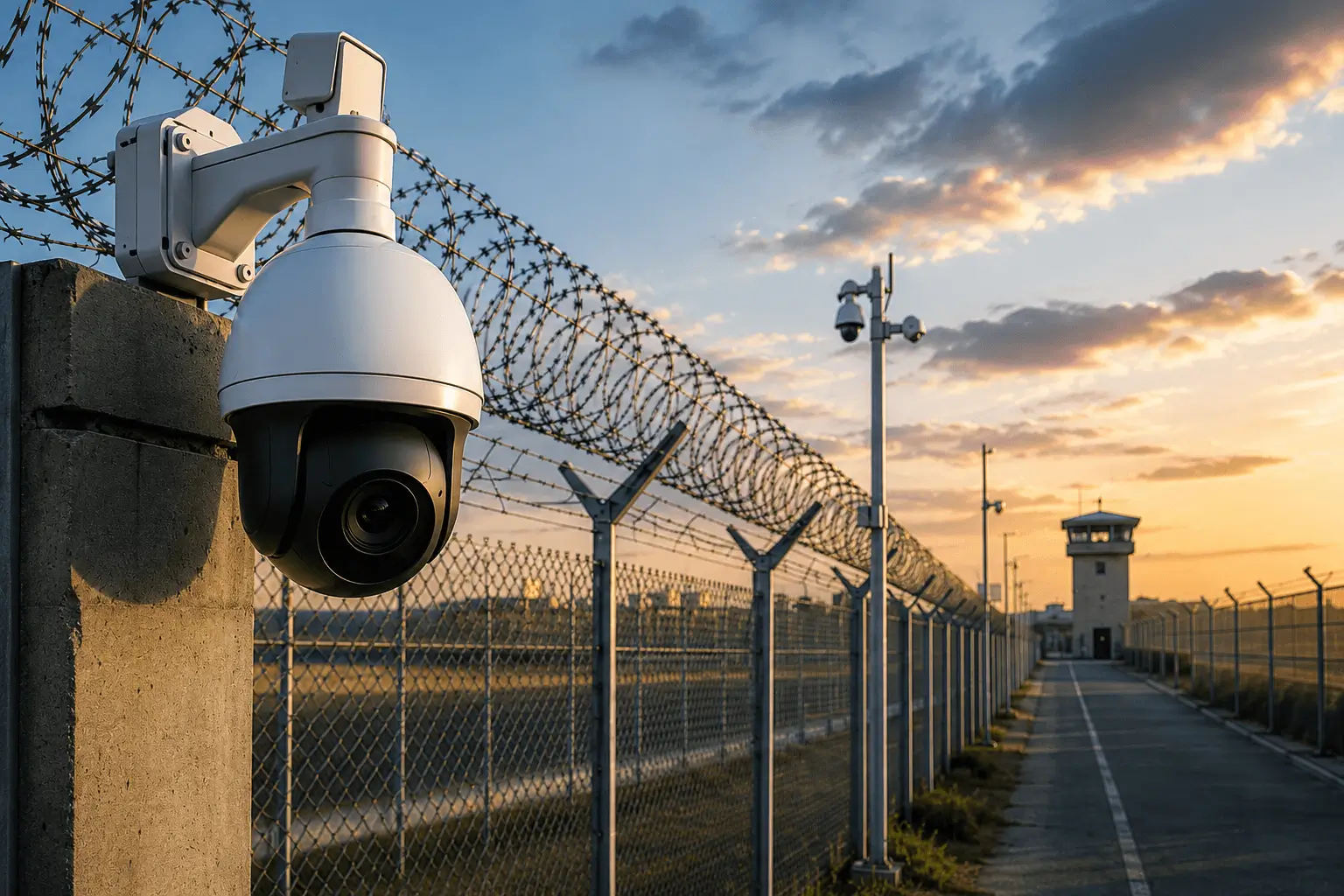
A camera alarm is not enough
Most perimeter installations tell an operator that motion occurred somewhere, at which point a person has to work out what it was and whether it matters. By then the event is underway. The difference here is that a valid detection does not raise an alarm — it opens a managed security track, with a unique identity, a classification, a confidence score, a behaviour history and an evidence package attached to it.
Three threat classes, one platform
People are detected by behaviour as much as presence: line crossing, zone entry, loitering, climbing, repeated approach, movement toward a protected asset. Vehicles are judged by intent: restricted entry, wrong-way movement, abnormal stopping, dwell in a sensitive zone. Drones are handled in configured sky sectors, with the tuning that separates a small aircraft from a bird or from background motion — the failure mode that makes most systems unusable.
The camera follows without being told
When a track is confirmed the platform interrupts its patrol pattern, moves to the sector, adapts zoom and keeps the object inside a configurable tracking region. As the target crosses into another camera’s field of view, the handoff preserves the track identity and the evidence collected so far, so the operator follows one continuous story rather than a series of disconnected clips.
Camera-only by design
No radar, no RF, no additional sensing infrastructure. The platform runs at the edge or connects to an existing VMS, which makes it deployable on a perimeter that already has cameras on it.