All Case Studies
DEFENSE Counter-UAS R&D Computer Vision

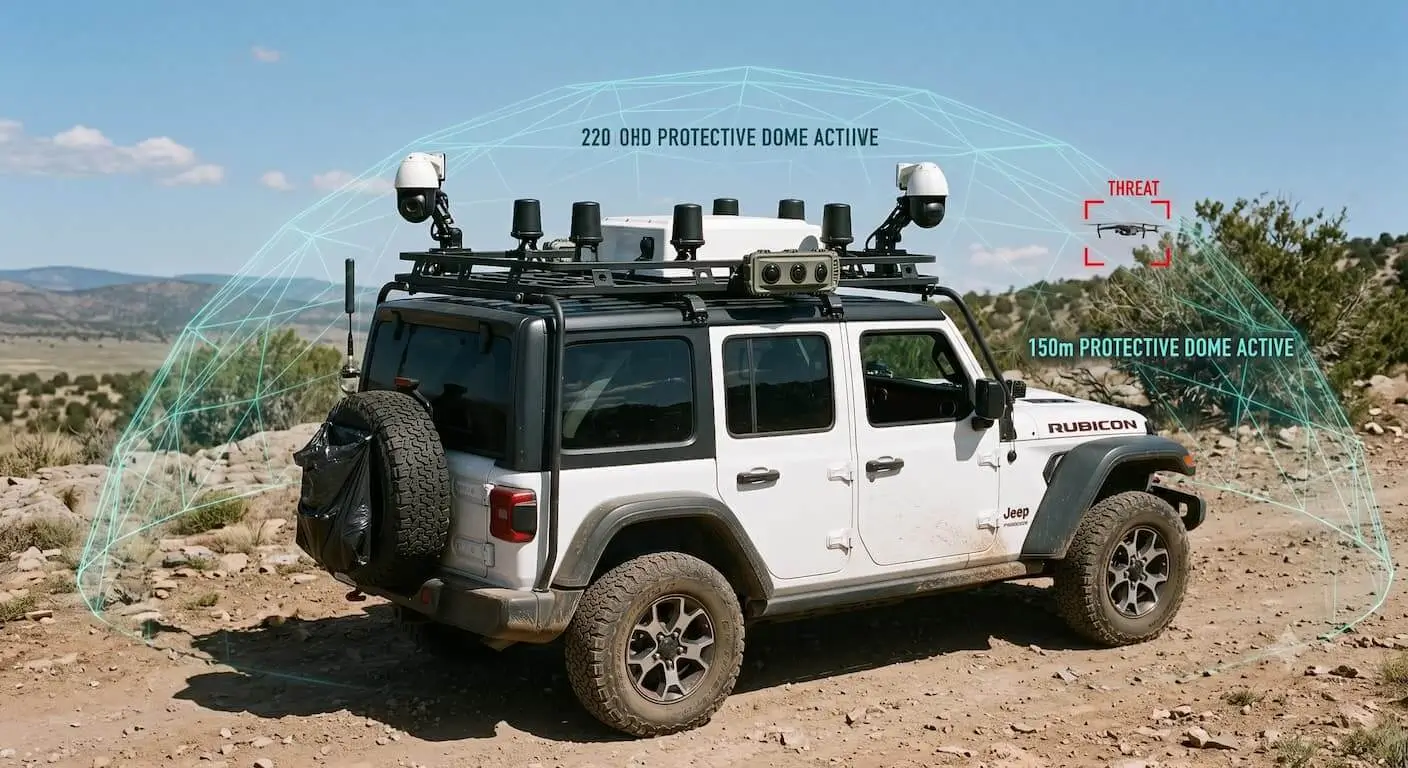
SkySentinel Mobile

R&D platform: multi-sensor counter-UAS detection from a vehicle in motion.

Passive acoustics, radar, panoramic vision, sensor fusion
Core Tech
Problem

Commercial drones are cheap, quiet and everywhere, and they have become a genuine threat to convoys, public events and high-risk individuals. Almost every counter-UAS system on the market assumes a fixed site — and an autonomous drone flying a pre-planned route emits no radio link to intercept.

Objective

Prove that early detection, classification and automatic tracking of approaching drones is achievable from the roof of a moving security vehicle, with no single sensor carrying the burden alone.

System Architecture

Hardware

  • Five microphone-array nodes synchronized to within microseconds; rotor signature detection and bearing estimation
  • transmitting nothing

Hardware

  • Range
  • radial velocity and estimated trajectory for small objects
  • enabling closing speed and time-to-arrival

Hardware

  • Uninterrupted 360-degree visual coverage feeding continuous situational context

Hardware

  • Two independent stabilized cameras for confirmation and sustained tracking

Hardware

  • Cross-correlation across layers
  • combined confidence scoring and target association
Technical Stack
Microphone arrays DSP Radar Panoramic cameras PTZ optics Sensor fusion Embedded Linux
Results

A roof-mounted multi-sensor architecture with a fusion engine that cross-correlates detections from passive acoustics, short-range radar and panoramic vision, computes a combined confidence score and decides which detections belong to the same target. 360-degree coverage, five acoustic sensing nodes, four or more threats managed in parallel, and a two-second design objective from detection to first alert.

360u00b0
Azimuth coverage
5
Acoustic sensing nodes
4+
Threats in parallel
2
Independent PTZ cameras
u22642s
Detection to first alert

An airborne threat against a vehicle that never stands still

A moving security vehicle is a far harder problem than a fixed installation. Engine, wind and road noise mask the drone’s acoustic signature. The vehicle changes heading constantly, so every bearing needs a reference frame to mean anything. And an autonomous drone flying a stored route transmits nothing to intercept. That combination is what this R&D programme set out to solve.

Complementary layers, one fusion engine

No single sensor beats this threat alone, so no single sensor was asked to. Each layer contributes partial information and the fusion engine does the reasoning: cross-correlating detections, computing a combined confidence score, and deciding which detections belong to the same target.

Acoustics detect and bear. Radar supplies range, radial velocity and trajectory — the numbers that turn a detection into a priority. Panoramic vision keeps continuous context, and two independent PTZ cameras confirm and follow.

Passive by design

The primary detector emits nothing. Five microphone arrays, synchronised to within microseconds, listen for rotor signatures and estimate bearing. An adversary flying an autonomous drone gets no indication that the convoy has already seen them.


The Weapon Detector PTZ Perimeter Security